
Tanzanite - The brilliance of a unique blue
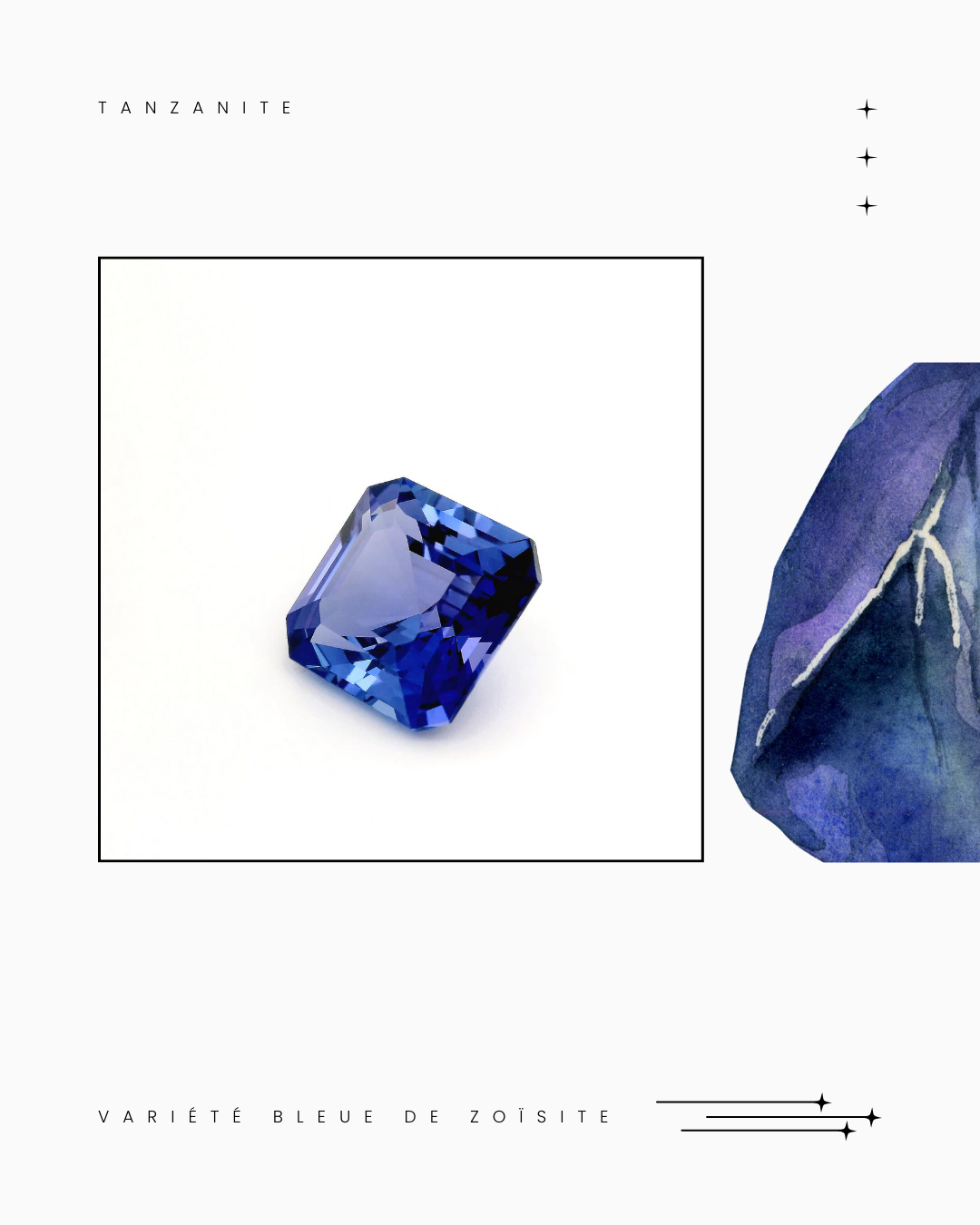
General information
Chemical formula: Hydroxylated calcium and aluminum silicate
- Refractive index : 1.69 to 1.70
- Optical character : positive biaxial
- Density: 3.15 to 3.88
- Hardness : 6.5 on the Mohs scale
- Crystal system: orthorhombic
- Color : blue to purple
- Luster : vitreous
- Strong pleochroism : blue to purple
- Source: the only known source of tanzanite today is Tanzania
- Treatment: heating at 300 to 400° to enhance the blue-purple color
- Stones that resemble tanzanite: blue spinel, sapphire, blue glass, iolite, synthetic corundum
How to choose a Tanzanite?
-

Color
A high-quality tanzanite features an intense blue with purple hues, sometimes slightly burgundy. The saturation should be high and even, with no visible zoning.
-

Size Style
Cut plays an essential role. It must feature the right proportions and allow for excellent light dispersion. Cushion, brilliant, oval, or trillion cuts are particularly well suited to this gemstone.

